Wednesday, 16 March 2011

Winter into Spring


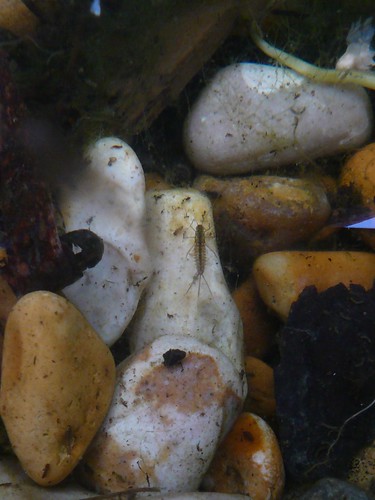
The pond is starting to come alive after the winter. All the plants are shooting and growing, and the marsh marigolds are covered in buds. Peering into the water I have seen lots of Daphnia (water fleas) and many types of insect larvae swimming around.

I can't identify them all, but there are mayfly larvae (which is no surprise since I watched mayflies emerge from the water last August), and rat-tailed maggots which are hoverfly larvae. These latter are often associated with stagnant water, but I watched the adult Brindled Hoverflies mating and laying their eggs in the pond last summer, and it certainly isn't stagnant!

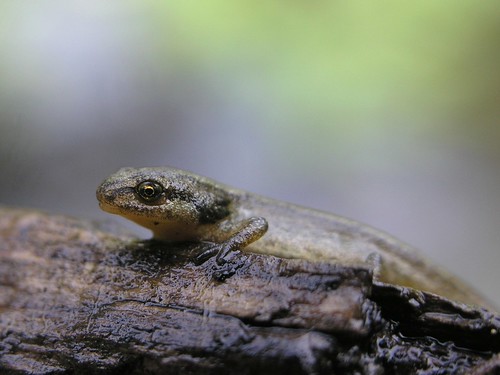
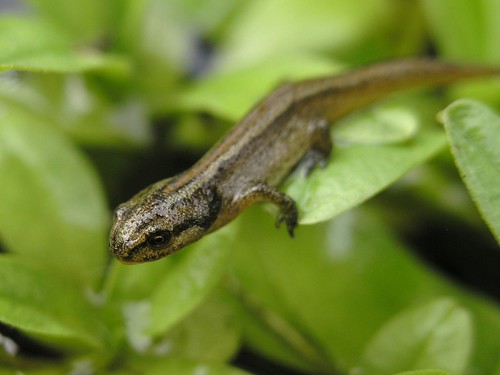
Sadly, there is no frog or newt spawn this year, but that doesn't surprise me as our little babies from last year are too young to breed yet, and there aren't many ponds around here for 'local' amphibians to have come from. One bit of good news on the amphibian front however; I disturbed a young newt basking in the sun-warmed shallow waters a couple of days ago. So at least one of our newtlets survived the very cold and snowy winter!
Friday, 7 January 2011

Photo Hopes for 2011

I'm not doing New Year resolutions. I can never keep them. Instead, I'm planning some photos that I really hope to get this year, but it won't be a failure if I don't, because nature is a fickle thing. I've already got pics of some of these, but I really want a 'portrait' quality image of them.

These are just some of my 'targets' for the lens this year, in no particular order:
  • Frog.
  • Frogspawn.
  • Female Wolf Spider with egg sac/spiderlings.
  • Mining Bee.
  • Mating Grasshoppers.
  • Thick-Legged Flower beetle in flight (they look so ungainly).
  • Dragonfly (any species).
  • Holly Blue butterfly.
  • Rose Sawfly laying eggs.
  • Parasitic Wasp.
  • Plant Louse.
  • Garden Orb Spider spiderling ball.
  • The scarab beetle that has flown off every time I've seen one for the last 2 years.

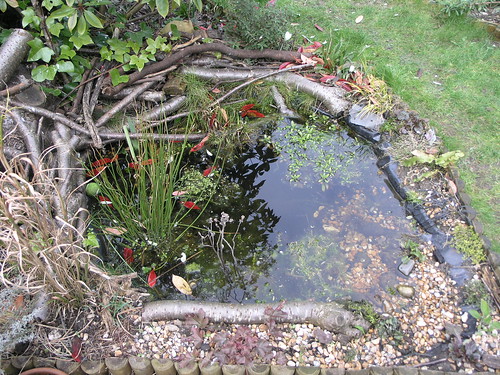
I'm also planning to take a pic of the pond at least every 2 weeks, hopefully every week or even more often in spring/summer, to record its first full year.

It all but vanished in December. You can just make out some ice under all the snow. Fortunately the plants seem to have survived (another good reason to buy UK native species). Just gotta hope the water beetle, frogs, newts and everything else found somewhere warm and safe to spend the winter.


Soon it will be spring, the garden will begin to awaken, and a new year of sitting out there and peering into bushes (for hours) can begin.

Bliss.

Monday, 11 October 2010

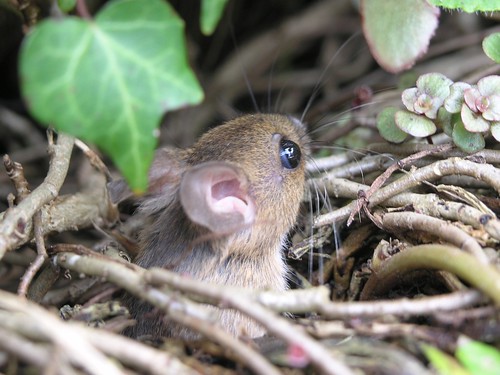
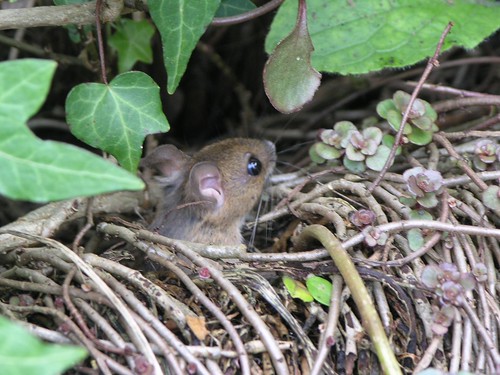
Wood Mouse (Apodemus sylvaticus)

I was sitting taking some photographs of the pond the other day when I kept hearing rustling noises coming from the top of the low wooden wall along the side of the garden. I couldn't see anything obvious, so I assumed it was a small bird or something in next-door's garden.

As I was preparing to go back indoors, I just happened to be looking at the right spot as something fast and brown disappeared into the tangled Sedum stems growing over the wall. A few minutes of watching and I discovered that it was a beautiful, huge eyed Wood Mouse, making repeated trips along the wall under the ivy to gather nesting material.

I crept closer and with a hefty dose of patience, luck and muscle cramp I got a few photos and this awesome piece of video. I quickly realised that the mouse was way too fast to get many decent pictures in the dark corner where it was emerging. A sudden flash of inspiration lead me to record this short video of the mouse cautiously emerging from the hole.

The mouse is easily identified as a Wood Mouse, with the ginger-red fur, white belly and insanely huge black eyes. Cute as a button.

I am thrilled that a wild mammal has set up home in my garden, and that I know about it. We have the occasional visiting fox, which is truly wonderful, but not the same as a resident. I wouldn't be surprised if there are other mammals living in my garden, but I've never seen them or seen evidence of them, making this one very special indeed.

Smooth Newt (Triturus vulgaris) Eft


The newt tadpoles have lost their gills and left the relative safety of the pond now. I keep finding these tiny, perfect mini-newts striding purposefully around the garden.

They are still only about an inch long and are called 'efts', although personally I think 'newtlets' is way cuter and suits them better. It will be at least 3 years before they are old enough and big enough to breed.

I worry a little that I'm going to accidentally hurt one while gardening as they hide under plants and in the bark chipping I use as a mulch. I'm learning to look carefully! They have also traversed the lawn path to reach the bed on the other side, so there is the additional worry of stepping on one hidden in the grass. I'm going to install some stepping stones on the path so I can see where (and on whom) I'm standing.

I've provided as many hiding places for them, and the froglets, as possible around the garden, from the log-pile full of leaf litter next to the pond to old terracotta pot halves full of damp dead leaves. Hopefully they will survive and thrive :)

I look forward to watching them grow big and strong, and seeing them return and breed in my pond in a few years time.

The Odd Couple


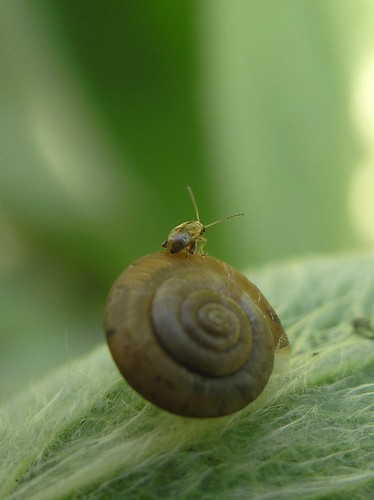
Flea Beetle and Snail, originally uploaded by Pipsissiwa.

The garden is full of these neat little beetles every year. I especially love their golden syrup amber colour. The swollen rear femoral leg sections allow them to jump powerfully, giving them their common name of 'Flea Beetle'. This species is Aphthona flava, but there are many others in the UK, all tiny, such as Phyllotreta nemorum and members of the Altica genus.

I chanced upon this one sitting happily and cutely on the shell of a small snail. The photo opportunity was too good to miss. :)

Mushroom


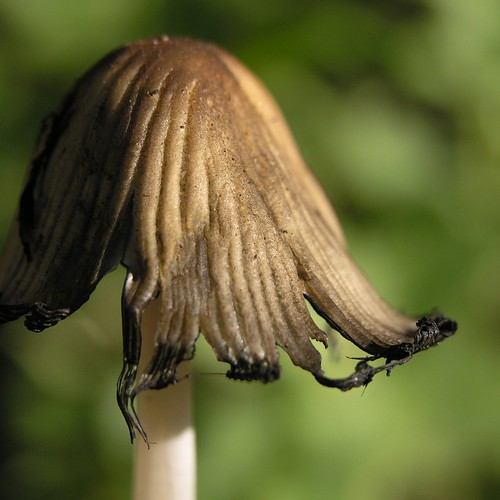
Mushroom, originally uploaded by Pipsissiwa.

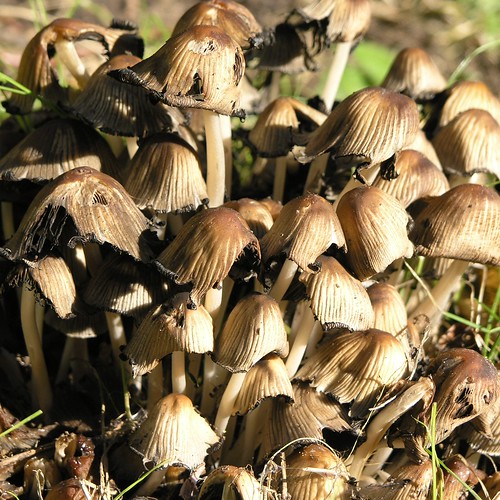
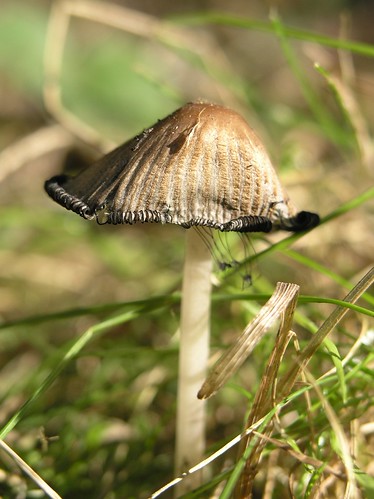
Ah, it must be Autumn. Two large clumps of these attractive little mushrooms have appeared at the end of the garden.


I especially like the tatty, curly black edges, which contrast so beautifully with the white stem and brown cap. Those colours look like pure Autumn to me.


I haven't worked out yet what type they are with any certainty, and will update this post as and when I do!

Thursday, 2 September 2010

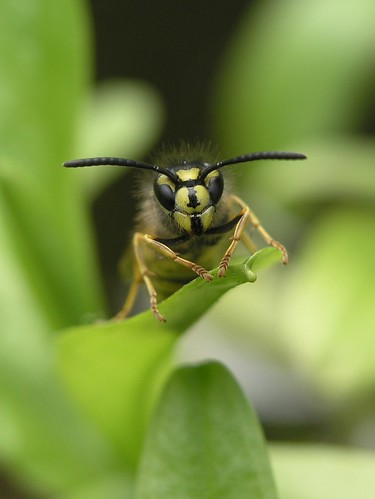
Common Wasp (Vespula vulgaris)

Wasps are unappreciated beauties, so striking in their yellow and black. Common Wasps can be distinguished from similar species (like the German Wasp) by the black anchor shape on their faces. Away from their nest, they are unlikely to sting unless you flail around and scare them, as so many people do.

Now that I have a pond, all sorts of new insects visit including lots of new hover fly species and a number of Common Wasps. I love watching them land on the pebbles or plant leaves and then bob down to drink.

One appears, drinks then flies away. A minute or so later another (or perhaps the same one) comes down and does the same. This goes on for hours. I have seen at most 4 wasps drinking at once. I assume they are harvesting water to make the 'paper' for nest building.